Trusted by 1,000+ Aviation Professionals

Say Yes to Every
Deicing Request This Winter

Purpose-built de-icing systems that transform winter weather from a crisis into a routine operation. Say goodbye to grounded flights, makeshift scraping with credit cards or brooms, and saying no to profitable fuel sales.

20+ Years of Experience
1,000+ Happy Customers
Zero Safety Compromises
Professional aircraft deicing carts and systems for airports and FBOs - 60-200 gallon capacity mobile equipment

Does This Winter Deicing Scenario Sound Familiar?

⚠️

Dangerous De-icing Methods

Credit cards and brooms aren't de-icing tools—they're last resorts. Stop risking delays, damage, and danger.

💸

Grounding Profitable Flights

That $8,000 charter flight? Grounded. The medical transport? Delayed.

🚫

Turn Away Business

When a transient aircraft asks for deicing, saying "no" means losing the fuel sale, hangar fees, and future visits.

You shouldn't have to choose between safety, service, and profitability

The Equipment to Keep You Operating All Winter Long

Purpose-built systems that make deicing a safe, reliable, one-person job.

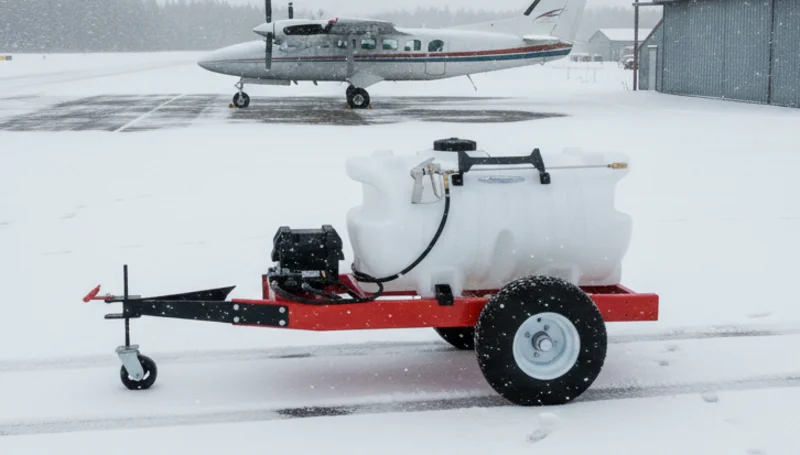
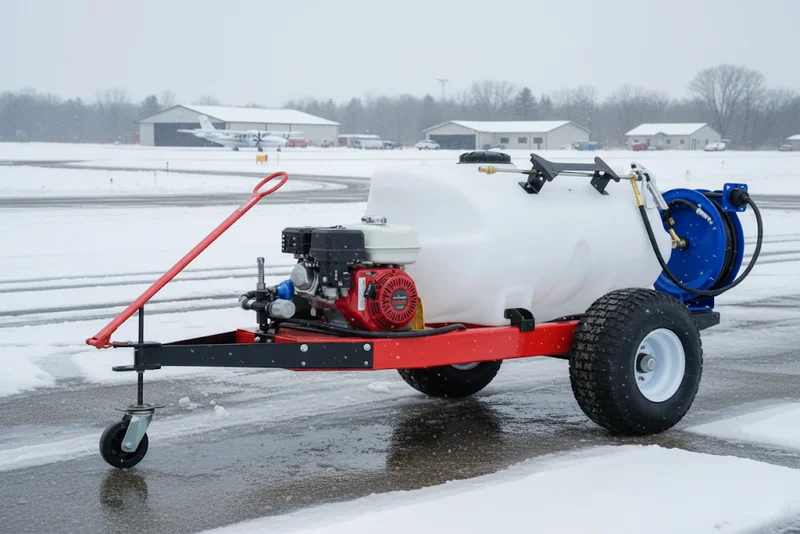
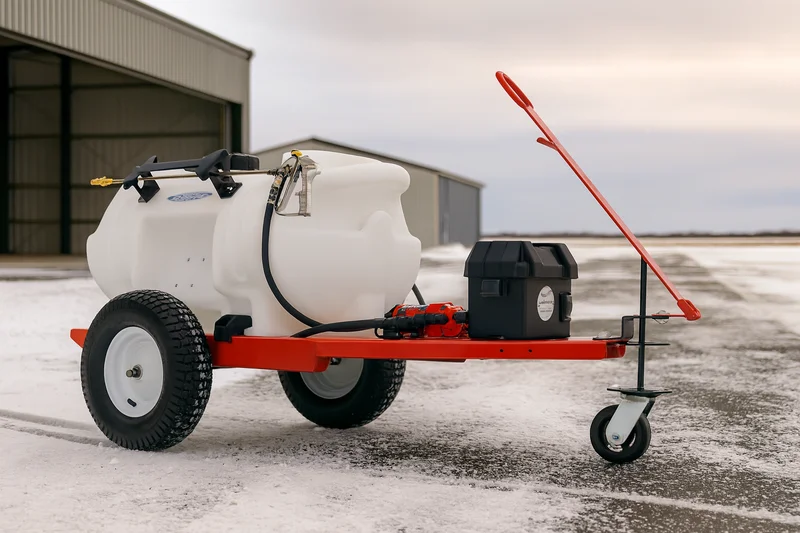
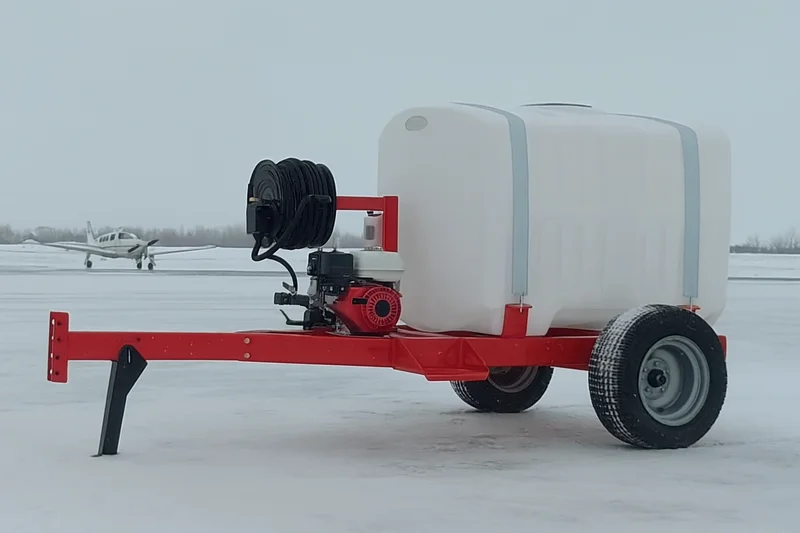
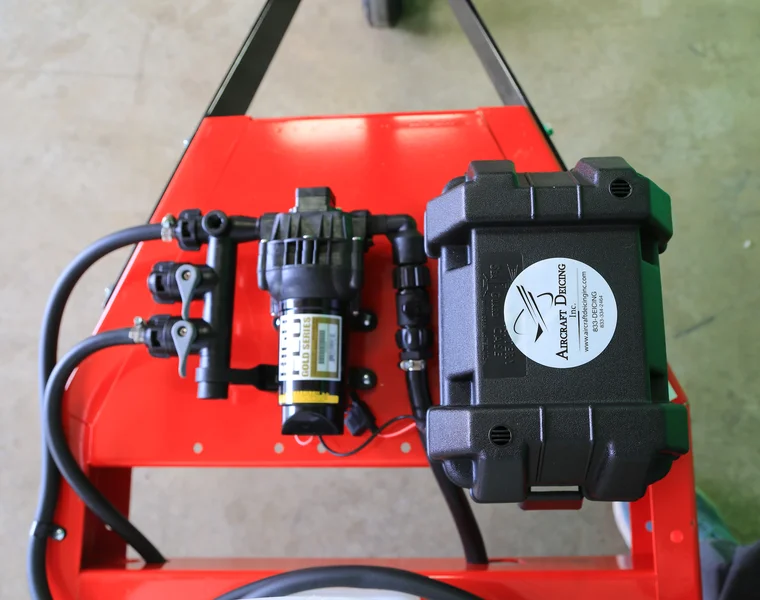
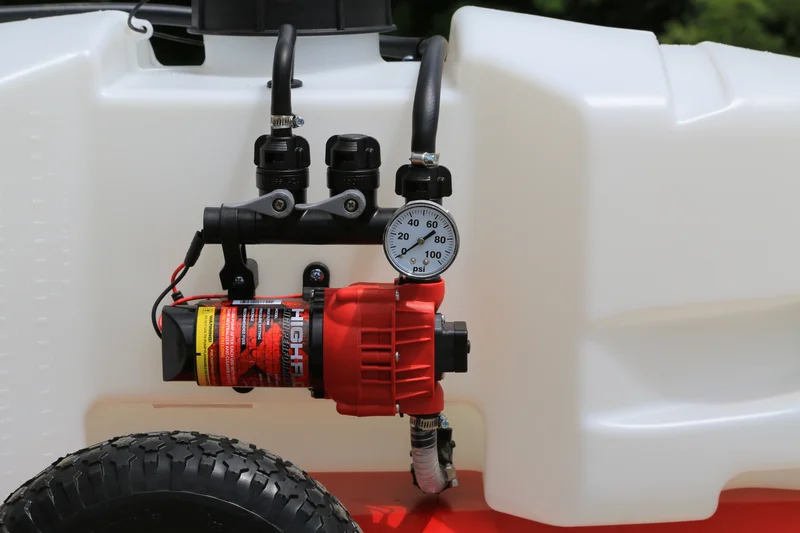
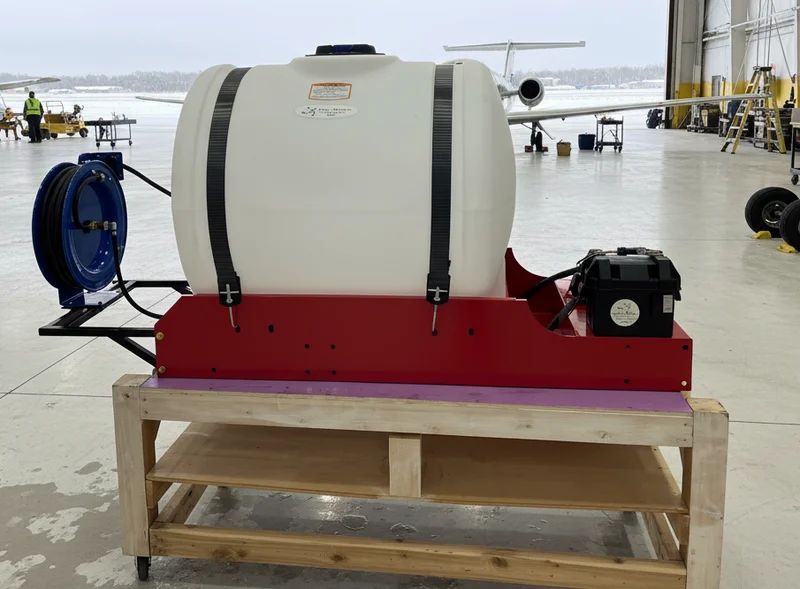
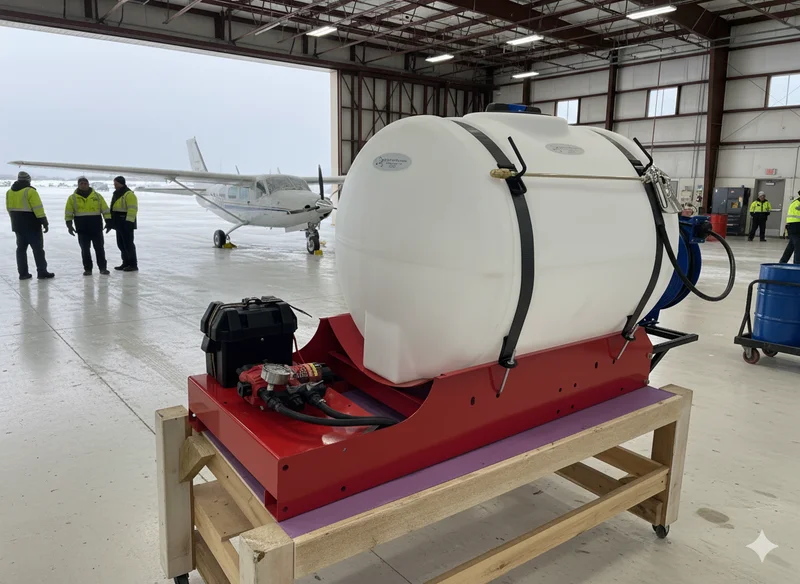
Professional deicing system in action
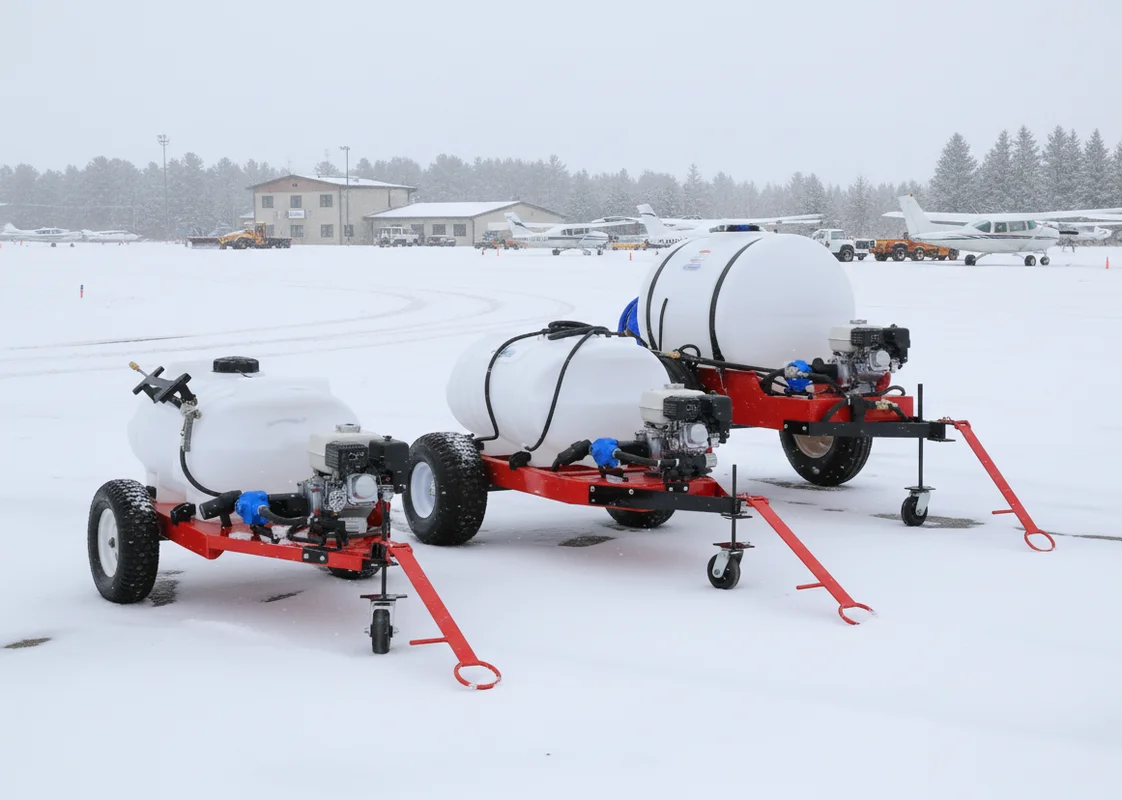
3-200 Gallon Capacity

Deicing & Anti-icing Systems

  • 25-foot vertical reach Handle tail sections and larger aircraft
  • One-person operation No crew scheduling, no delays
  • Heated fluid delivery Maintains optimal application temperature
  • All-weather construction Built to work when you need it most
View All Systems Starting at $1,415
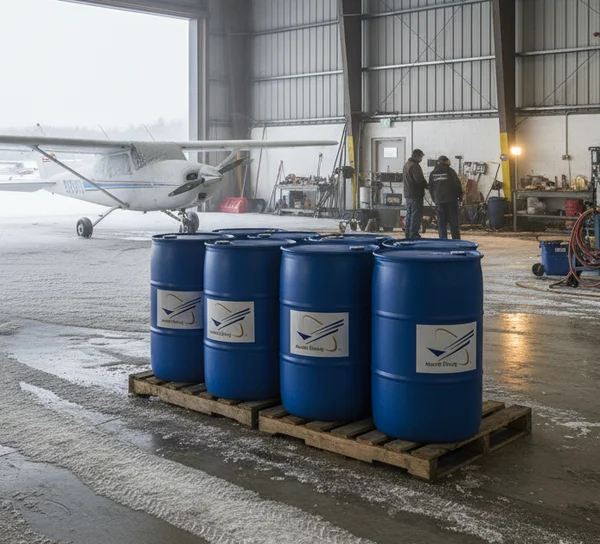
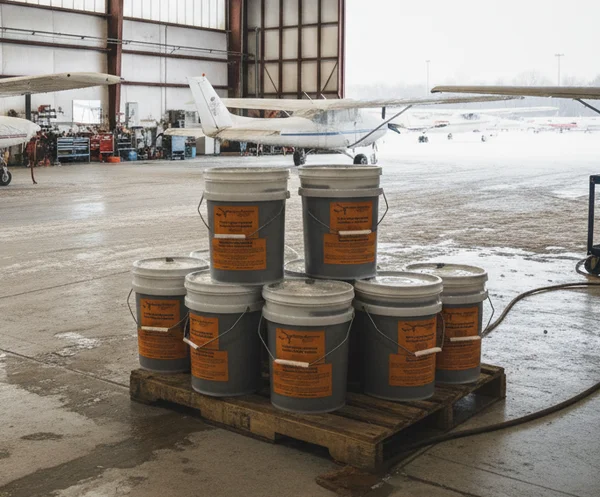
Professional aircraft ground de-icing fluids

Certified Aircraft Ground De-icing Fluids

Type I & Type IV Fluids
Type I (Orange): Heated application, removes frozen contaminants
Type IV (Green): Anti-icing protection, prevents accumulation
Certified to AMS 1424/1428 specifications—meeting all commercial aviation requirements
Effective down to -65°F when properly applied
Bulk pricing from drums to totes to truckload quantities
Learn more →
Deicing system enhancements and upgrades

System Enhancements & Upgrades

Customize Your Order
Immersion Heaters: Maintain fluid at 140°F for optimal de-icing
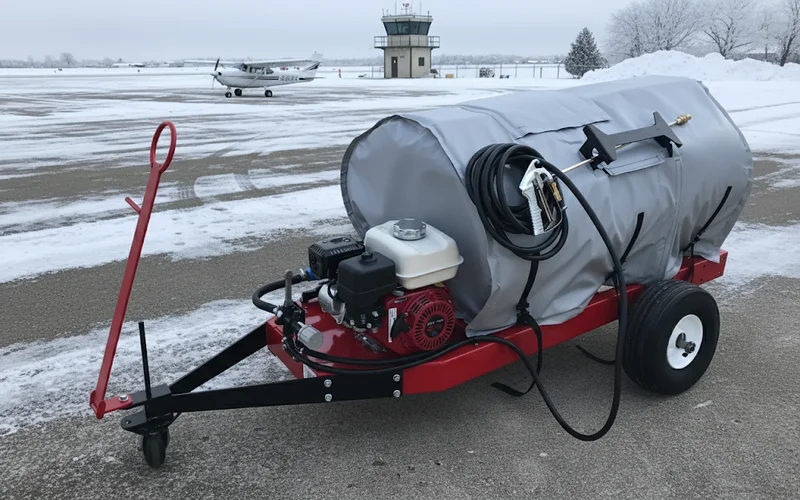
Insulated Tank Wraps: Prevent overnight freeze-ups, reduce heating time
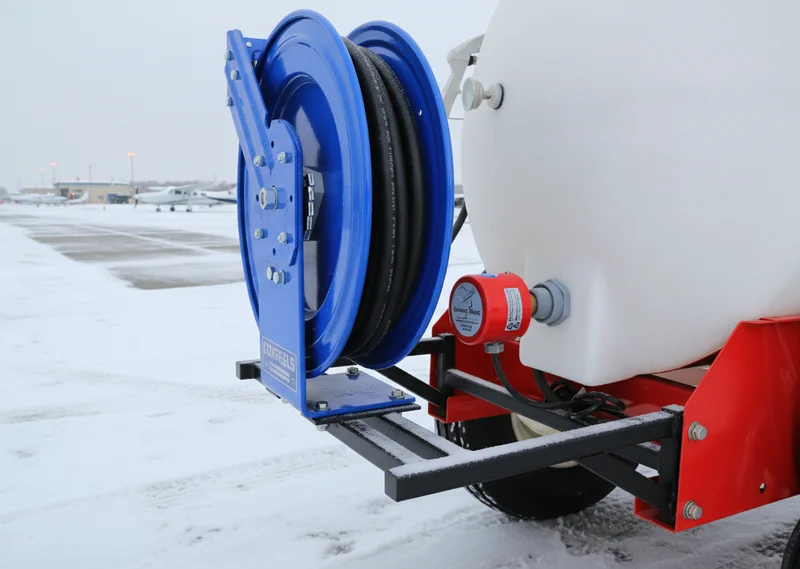
Professional Hose Reels: 50 foot reach, quick deployment and storage
Replacement Parts: Nozzles, pumps, hoses—everything to avoid downtime
Learn more →

When a pilot calls for de-icing, you need equipment that works. No excuses. No delays. No sending someone up with a credit card and a broom.

Real Customers. Real Results.

How aviation professionals transformed their winter operations

60-gallon professional deicing cart at FBO generating $50K winter revenue from transient aircraft deicing services

$50K New Winter Revenue

"We used to turn away transient aircraft needing deicing. Now we're the go-to FBO for winter ops. First season alone brought in $50K we never had before."

Arctic Package 60-gallon insulated deicing system for charter operator - zero winter cancellations in extreme cold

Zero Cancellations

"Last winter: zero weather cancellations. Our competitors grounded 15+ flights. Those customers are now ours. The system paid for itself in two weeks."

60-gallon anti-icing cart for flight school - reduced insurance premiums and maintained winter training schedule

Insurance Premium Reduced

"Our insurance company reduced our premium by $8,000/year after we eliminated credit card deicing. Plus, we can keep flight schedules even in winter."

Serving Aviation Professionals Across North America

From the Great Lakes to the Canadian Arctic, from New England airports to the Northern Plains, we equip aviation operations across the United States and Canada with professional deicing systems built for your climate.

Are you ready for this winter?

Don't let another season of lost revenue and safety risks pass you by

Free consultation
Custom sizing
Professional deicing equipment

Frequently Asked Questions

Aircraft Anti-Icing

What is anti-icing and why is it necessary for aircraft?

Anti-icing is the process of applying fluids to prevent the formation of ice on aircraft surfaces. It is essential to ensure the safety of the aircraft by maintaining its aerodynamic properties during ground operations and takeoff.

How is anti-icing different from de-icing?

De-icing removes existing ice, frost, and snow, while anti-icing prevents the formation of ice after de-icing or during conditions conducive to icing.

How long does the anti-icing protection last?

The duration of anti-icing protection depends on the type of fluid used, weather conditions, and the aircraft's activity. Typically, Type IV fluids can provide extended protection compared to Type II and III fluids.

Are your anti-icing fluids environmentally friendly?

Yes, we offer glycol-based anti-icing fluids designed to be effective while minimizing environmental impact.

What types of anti-icing fluid do you sell?

We sell Type IV anti-icing fluid which is commonly used because of its long-lasting anti-icing properties.

Can anti-icing fluids damage my aircraft's paint or components?

No, our anti-icing fluids are formulated to be safe for aircraft surfaces and components. We follow recommended application procedures to ensure there is no damage.

Aircraft De-icing

What is de-icing and why is it necessary for small airplanes?

De-icing is the process of removing ice, frost, and snow from the surfaces of an aircraft. It is essential to ensure safe flight operations by maintaining the aircraft's aerodynamic properties and preventing ice-related malfunctions.

Can de-icing fluids damage my aircraft's paint or components?

No, our de-icing fluids are specifically formulated to be safe for aircraft surfaces and components.

How long does the de-icing process take for a small airplane?

The duration of the de-icing process can vary depending on the extent of ice accumulation and the size of the aircraft, but it typically takes between 15 to 30 minutes.

Are your de-icing fluids environmentally friendly?

Yes, we offer glycol-based de-icing fluids that are designed to be effective and have minimal environmental impact.

How often should my small airplane be de-iced during winter operations?

The frequency of de-icing depends on weather conditions, but it is essential to perform de-icing before every flight if there is ice, frost, or snow accumulation.

De-icing and Anti-icing Fluids

What is the difference between de-icing fluid and anti-icing fluid?
  • Functionality: De-icing fluids remove ice, while anti-icing fluids prevent new ice formation.
  • Duration: De-icing fluids have a shorter effective period, whereas anti-icing fluids provide prolonged protection.
  • Application Timing: De-icing fluids are applied to remove ice, while anti-icing fluids are applied afterward to maintain ice-free surfaces.
What is the mixture for the Type I RTU (Ready-to-Use) De-icing fluid?

The Type I fluid is prepared by combining 55% Type I fluid with 45% Water.

Is the de-icing and anti-icing fluids Biodegradable?

Yes, they are fully biodegradable.

How long is the fluid good for?

If stored properly, the shelf life of both the de-icing and anti-icing fluids is two years from manufacture date.

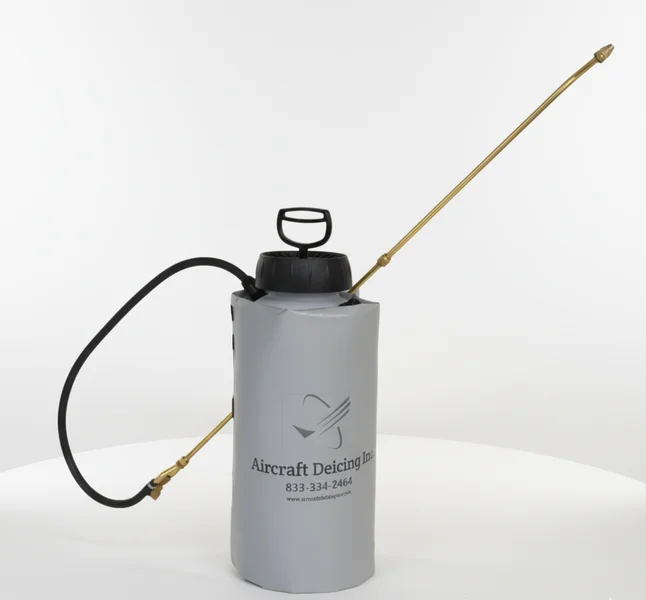
Handheld Sprayers

How hot will the fluid be heated to?

The heater will heat the fluid to a max of 120 degrees.

Are the sprayers available in smaller sizes than the 3 gallon unit?

No, we only carry the 3 gallon units.

What is the hose length?

42 inches.

How far will the spray go?

The spray stream will reach up to 24 feet.

Operational Considerations

How often should my aircraft be treated with anti-icing fluids during winter operations?

The frequency depends on weather conditions and the duration of ground operations. It is essential to reapply anti-icing fluids if the aircraft is exposed to freezing conditions for extended periods before takeoff.

What should I do if I suspect the anti-icing fluid is no longer effective?

Contact us immediately for a reapplication of anti-icing fluids. It is crucial to ensure the aircraft remains protected from ice formation.